Shopping cart

Subtotal 0

View cartCheckout

Amputation & Replantation Jodhpur

Understanding Hand
Reimplantation Surgery

Amputation and replantation care focuses on saving injured parts where possible and restoring useful function after severe hand, finger or limb trauma.

At Galwa Care Hospital, urgent assessment, microsurgical planning and wound care are coordinated to protect tissue, nerves, vessels and future movement.

Patients receive focused reconstructive care aimed at recovery, rehabilitation and the best possible functional result after a major injury.

REATTACH, RESTORE, RECOVER

How we help at
Galwa Care Hospital

At Galwa Care Hospital, reimplantation surgery combines microsurgical excellence with comprehensive post-operative
care to give every patient the best possible chance of a meaningful and lasting functional recovery.

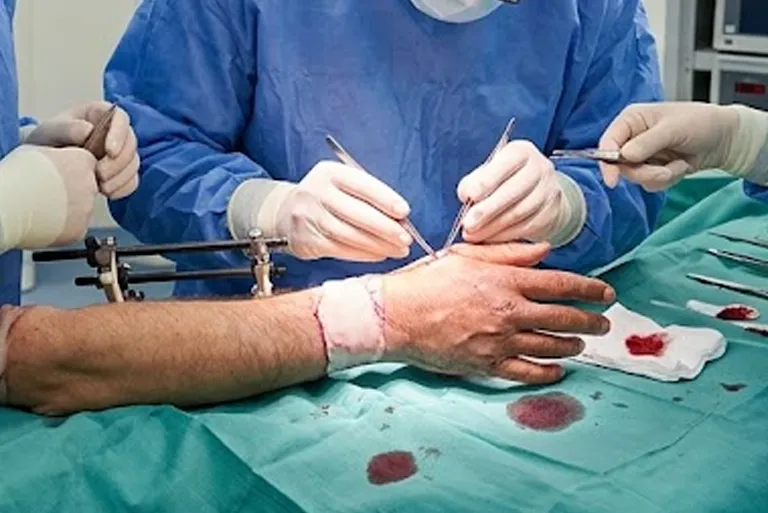
Our microsurgical team is experienced in managing reimplantation cases with the speed, technical precision, and clinical decision-making that these emergencies demand. From the moment a patient arrives, a rapid assessment of the injury and the condition of the amputated part determines whether reimplantation is feasible and likely to produce a meaningful functional result. Where reimplantation is indicated, the operative team prepares simultaneously to minimise delay. The surgery itself is meticulous and lengthy, with each structure reconnected in the sequence that best supports survival of the reattached part and maximises the potential for movement and sensory recovery.

At Galwa Care Hospital, the post-operative period is managed with close monitoring of the reattached part’s circulation and structured early rehabilitation that begins as soon as the surgical repairs permit. Physiotherapy and occupational therapy are central to the long-term success of reimplantation, helping the patient progressively regain movement, grip, and the practical use of the hand in daily activities. Recovery is measured over months and years, and our team remains consistently involved and supportive throughout, providing the clinical follow-up, rehabilitation guidance, and genuine encouragement that every patient needs during what is often the most demanding physical and emotional challenge of their life.

RECONNECT WHAT WAS LOST

Why and For Whom Is Hand
Reimplantation Surgery Important?

Reimplantation surgery is considered for every patient with a traumatic amputation where the amputated part
is suitable and the patient's overall condition allows for a procedure that offers meaningful functional recovery.

Complete traumatic amputation of the hand, thumb, or one or more fingers following injury.

Industrial, agricultural, or machinery-related accidents resulting in digit or hand loss.

Amputated part preserved appropriately and reaching specialist care within the critical time window.

Younger patients with higher regenerative potential and greater capacity for nerve recovery.

Desire to restore natural sensation, movement, and coordinated hand function.

Situations where prosthetic use would be limiting, unsuitable, or less functional than reimplantation.

Clean-cut or sharp amputations offering better tissue quality and a more favourable prognosis.

Strong patient motivation for the lengthy rehabilitation process needed for functional recovery.

Occupational or daily life demands requiring fine hand control, grip strength, or pinch function.

Anatomical preservation and body integrity as a meaningful personal and psychological priority.

Shape Image

Questions & Answers

Frequently Asked Questions.

The amputated part should be gently rinsed with clean water or saline if available, wrapped in a clean moist cloth, placed in a clean sealed plastic bag, and that bag placed in a container of ice and water to keep it cool without freezing. The patient and the amputated part should be transported to a specialist hand surgery facility as quickly as possible. Time is the most critical factor in reimplantation; every minute without blood supply reduces the viability of the tissues. Calling ahead to alert the hospital allows the surgical team to prepare before arrival.

Reimplantation is not always possible or advisable. The decision depends on the nature of the injury, the ischaemia time, the condition of the amputated part, the patient's overall health, and the likely functional outcome. Clean-cut injuries with a short ischaemia time offer the best prognosis, while severely crushed or avulsed injuries where the tissues have been pulled apart over a length are less amenable to successful reattachment. At Galwa Care Hospital, the clinical team makes this assessment rapidly and honestly, discussing the realistic options with the patient and family before proceeding.

Reimplantation surgery typically takes several hours depending on the complexity of the injury and the number of structures requiring repair. Post-operative monitoring in the immediate period focuses on circulation of the reattached part, with nursing staff checking blood flow regularly. Recovery extends over months, with physiotherapy and occupational therapy essential for rebuilding movement, strength, and hand coordination. The degree of sensory and motor recovery that ultimately develops depends on nerve regeneration, which occurs slowly over an extended period following surgery.

Function and sensation recovery following reimplantation are progressive and variable. Most patients regain meaningful grip and hand use over the months following surgery, though the degree of recovery depends on the injury type, the patient's age, the quality of the nerve repairs, and commitment to rehabilitation. Younger patients generally achieve better nerve recovery. Partial to significant sensory recovery is possible in most cases, developing gradually as the repaired nerves regenerate. Even when function is not complete, patients consistently report that retaining their own hand provides better sensory feedback and psychological satisfaction than prosthetic alternatives.

When successful, reimplantation of the patient's own hand or digit generally offers better sensory feedback, psychological acceptance, and fine motor capability than prosthetic solutions, particularly for thumb and multi-digit amputations. In a small proportion of cases the reattached part does not survive despite technically successful surgery, and this outcome is always discussed with the patient before the procedure so that expectations are realistic. If reimplantation is not successful or not possible, reconstructive alternatives including prosthetics and, in selected cases, toe-to-hand transfer are available and discussed at Galwa Care Hospital as part of a comprehensive hand reconstruction plan.

Appointment Request Form

Care Packages for Every Stage

Take the First Step Towards Better Care

Schedule your personalized consultation at Galwa Care Hospital to experience medical expertise combined with compassionate support for every patient journey
GALWA CARE