Advanced IVF, IUI & ICSI treatments with highest success rates — compassionate care for every step of your fertility journey.
State-of-the-art IVF lab, experienced embryologists and personalised protocols for the best possible outcomes.
Comprehensive care across pregnancy, fertility and advanced gynaecology — delivered with privacy, safety and compassion.
15+ years of expertise, advanced labs and personalised treatment plans.
Advanced facial & body cosmetic procedures by expert surgeons — natural results, minimal downtime, maximum confidence.
Board-certified surgeons delivering natural, beautiful results with the latest techniques.
Expert reconstructive & plastic surgery for hand, birth deformities, cancer reconstruction and trauma — restoring form and function with precision.
Advanced body contouring, breast surgeries & intimate procedures by expert surgeons — natural results, renewed confidence.
Advanced laser skin treatments, intimate wellness procedures & expert hair restoration — all under one roof.
State-of-the-art laser tech & hair restoration by certified specialists.
Comprehensive fertility, hormonal & genetic diagnostics for females and males — accurate, fast and confidential.
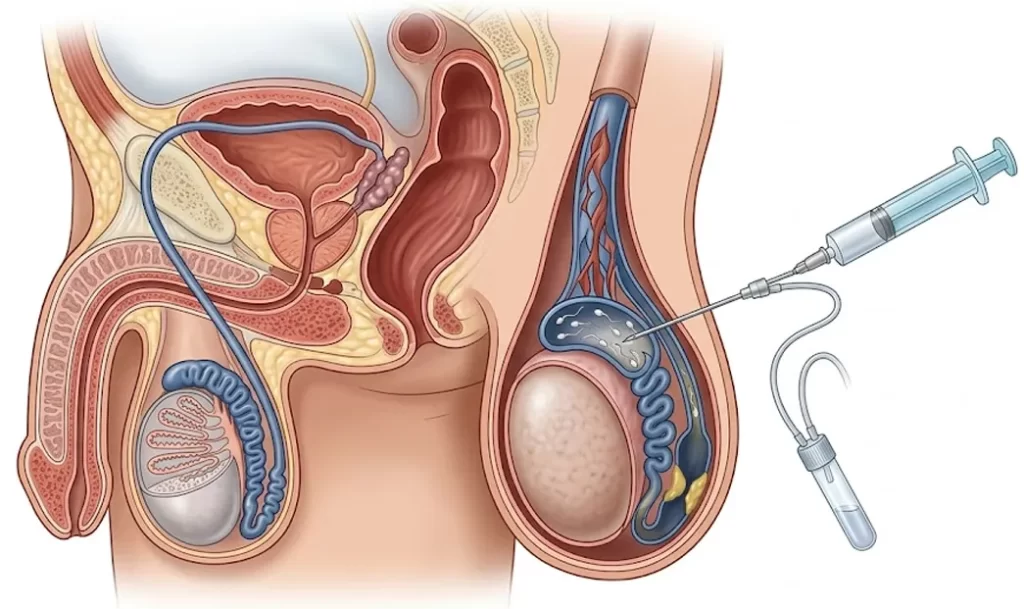
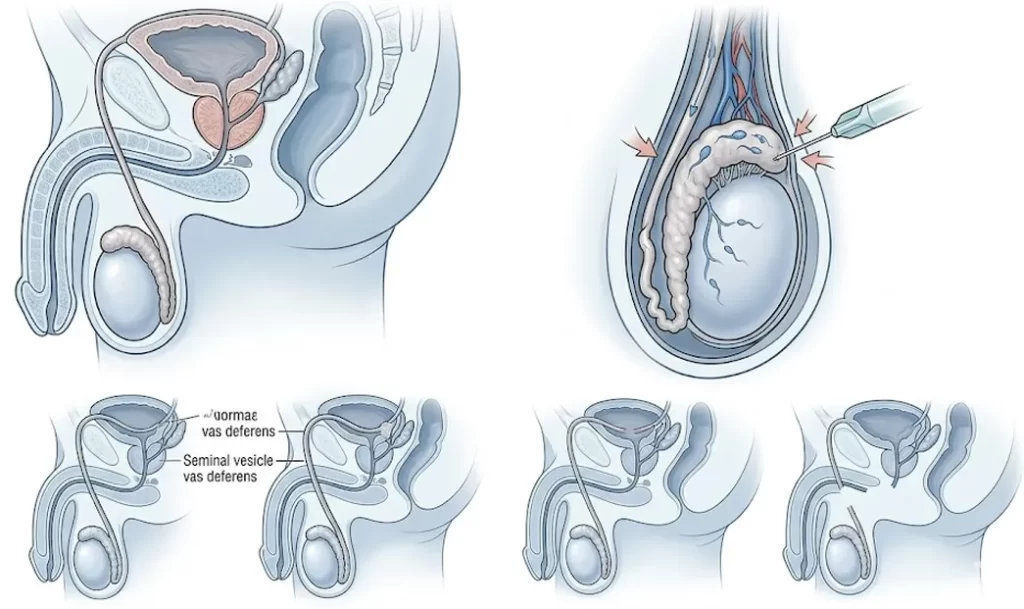
PESA, TESA and TESE are sperm retrieval procedures used when sperm are absent from the semen but may still be available in the reproductive tract.
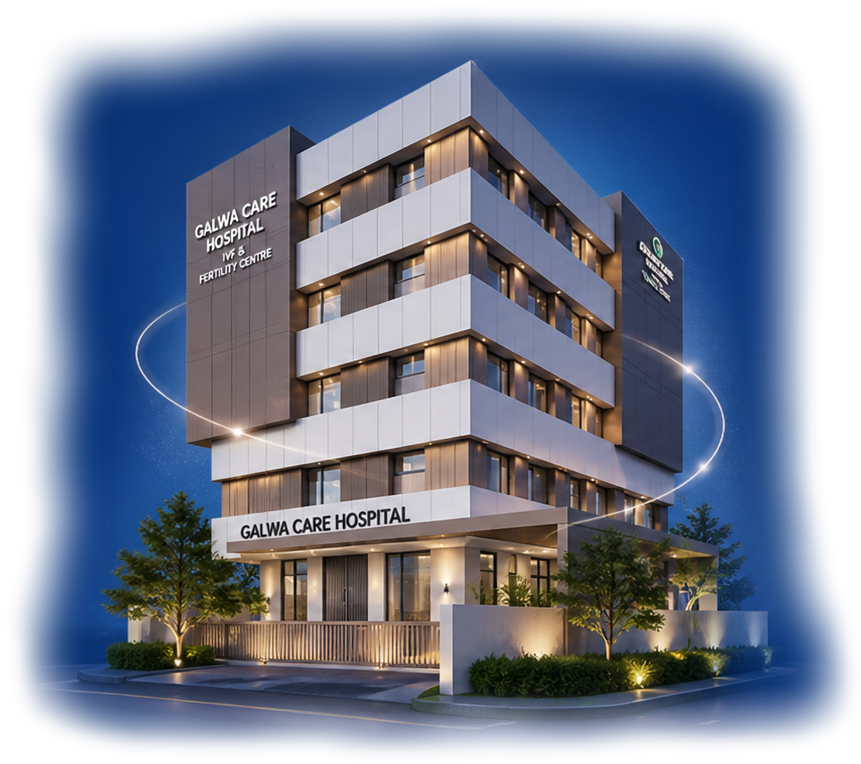
At Galwa Care Hospital, Jodhpur, fertility specialists, andrologists and embryologists coordinate retrieval and ICSI planning under one care pathway.
These procedures can make biological fatherhood possible for men with obstructive or selected non-obstructive azoospermia.
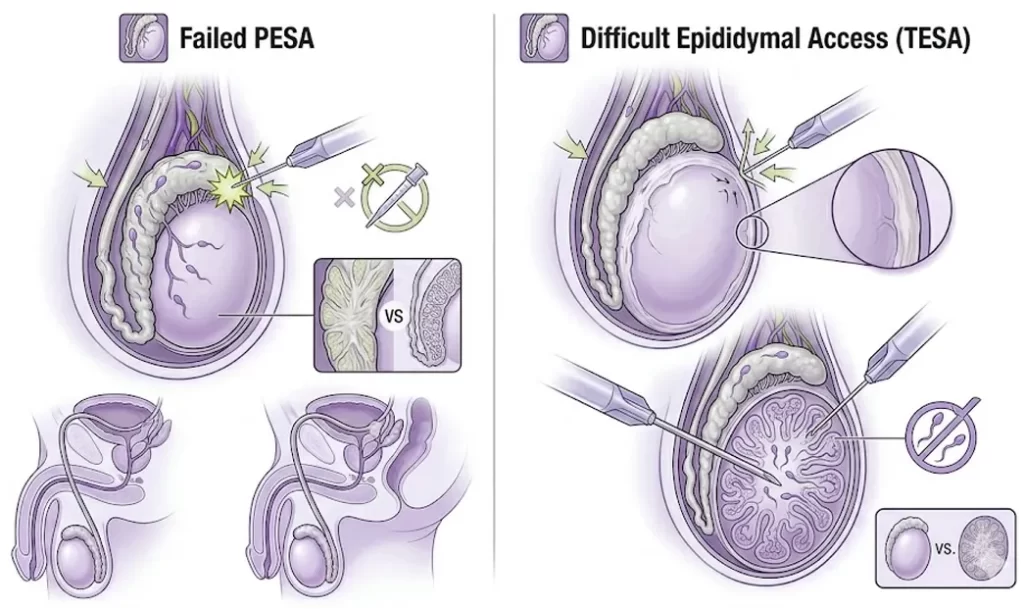
When the testicles produce sperm normally but a physical blockage prevents sperm from appearing in the semen, PESA retrieves sperm directly from the epididymis where sperm are stored and mature.
A condition where the tubes that carry sperm from the testicles are absent from birth, commonly seen in men who carry the cystic fibrosis gene, making PESA the most appropriate first retrieval method.
When PESA has been attempted but failed to retrieve sufficient sperm, or when epididymal access is technically challenging, TESA retrieves sperm directly from testicular tissue instead.
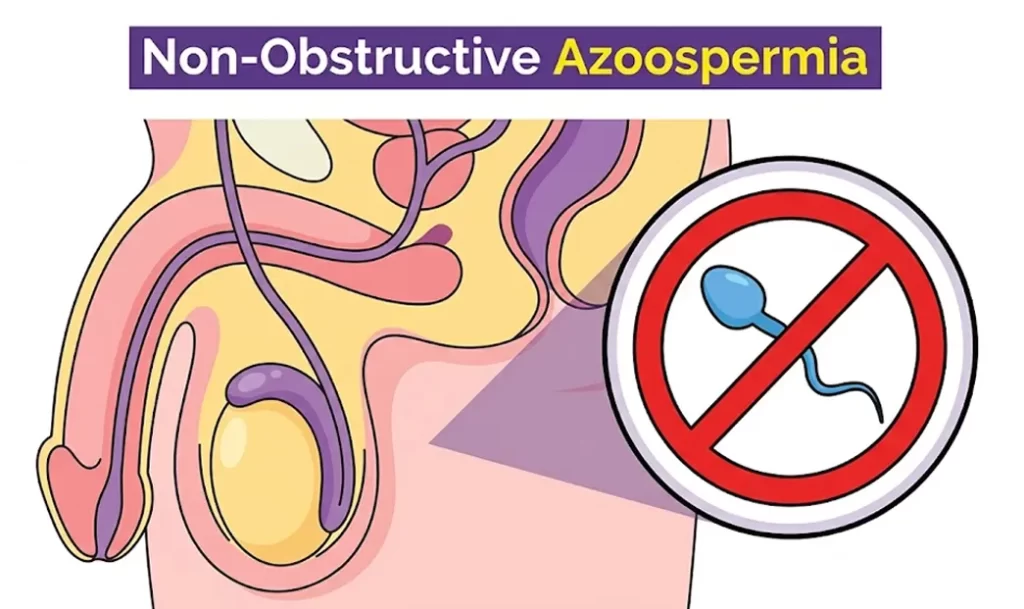
When the testicles themselves produce little or no sperm due to impaired spermatogenesis, TESE provides a more comprehensive tissue biopsy to search for areas of focal sperm production.
Conditions such as Klinefelter syndrome, Y chromosome microdeletions, or cryptorchidism that result in severely impaired sperm production where Micro-TESE offers the best possible retrieval opportunity.
Medical history, fertility status and goals are reviewed so the safest, most suitable treatment plan can be personalised.
Anaesthesia is given as required so the procedure remains safe and comfortable.
Sperm is retrieved directly from the epididymis or testis using the planned surgical technique.
Medical history, fertility status and goals are reviewed so the safest, most suitable treatment plan can be personalised.
A semen sample is tested, prepared with protective media and frozen securely for future fertility treatment.
Ports are closed neatly and recovery is monitored before safe discharge with clear after-care advice.

For men with azoospermia who cannot father children naturally, these retrieval procedures make biological parenthood a genuine and achievable possibility through IVF and ICSI.

PESA and TESA require no surgical incision and are performed as quick, well-tolerated outpatient procedures with minimal discomfort and a very short recovery period required.

PESA in obstructive azoospermia has very high sperm retrieval success rates of over 90% in many centres, making it a reliable and consistently predictable first-line retrieval procedure.

TESE and Micro-TESE offer sperm retrieval success rates of 40 to 60% in non-obstructive azoospermia, providing genuine hope in even the most challenging and complex male infertility cases.

Retrieved sperm can be cryopreserved at Galwa Care Hospital, avoiding the need for repeat surgical procedures in subsequent IVF cycles and giving patients greater treatment flexibility.

All three procedures involve only small amounts of tissue and do not damage the hormone-producing Leydig cells of the testicle, preserving testosterone levels and sexual function completely.

Retrieved sperm, even in very small numbers, are sufficient for ICSI fertilization which requires only a single sperm per egg, making even limited retrieval outcomes clinically viable.

PESA and TESA have recovery periods of just 24 to 48 hours, while TESE recovery is generally complete within 5 to 7 days, minimizing disruption to normal daily life and activities.

Galwa Care Hospital provides thorough diagnostic workup before any retrieval procedure, ensuring the most clinically appropriate technique is selected for each individual patient.

From sperm retrieval through ICSI, embryo culture, and embryo transfer, Galwa Care Hospital provides complete integrated fertility care without the need for multiple external referrals.nn


Eggs Successfully Frozen

Vitrification Survival Rate

Years of Experience

Support to Call

Azoospermia is a condition where no sperm are found in the ejaculate. PESA, TESA, and TESE are surgical sperm retrieval techniques that directly extract sperm from the reproductive tract for use in IVF and ICSI treatment. The right procedure depends entirely on the cause of your azoospermia, your hormonal profile, ultrasound findings, and previous treatment history. PESA is preferred for obstructive azoospermia, TESA for obstructive cases where PESA is not feasible, and TESE or Micro-TESE for non-obstructive azoospermia. Your specialist at Galwa Care Hospital will determine the most appropriate approach after a comprehensive evaluation.
All three procedures are performed under local anaesthesia or sedation, so patients experience minimal to no pain during the procedure itself. Mild post-procedure soreness and scrotal discomfort are common but resolve quickly within a few days. PESA and TESA require only 24 to 48 hours of recovery before returning to normal activities. TESE typically requires 5 to 7 days of recovery. Your doctor at Galwa Care Hospital will provide detailed post-procedure care instructions and pain management guidance to ensure a comfortable and smooth recovery.
PESA in obstructive azoospermia has very high retrieval rates of over 90% in many centres. TESE in non-obstructive azoospermia has retrieval rates ranging from 40% to 60% depending on the underlying cause. Any surplus sperm retrieved during PESA, TESA, or TESE can be cryopreserved (frozen) at Galwa Care Hospital for use in future IVF and ICSI cycles, avoiding the need for repeat surgical procedures and giving patients maximum flexibility in planning subsequent treatment attempts.
No. PESA, TESA, and TESE do not significantly affect testosterone production or sexual function. All three procedures involve only very small amounts of tissue and are specifically designed to avoid damaging the hormone-producing Leydig cells of the testicle. Men who undergo these procedures maintain their normal hormonal profile and sexual function throughout and after the recovery period. This is an important reassurance for many patients who are concerned about the potential impact of sperm retrieval on their overall health and well-being.
Genetic testing including karyotyping and Y chromosome microdeletion analysis is strongly recommended before TESE, particularly in non-obstructive azoospermia, as certain genetic abnormalities may be passed to male offspring conceived through ART. Yes, retrieved sperm from all three procedures are used with ICSI (Intracytoplasmic Sperm Injection), where a single sperm is directly injected into each mature egg, making even very small numbers of retrieved sperm fully clinically viable for achieving fertilization and pregnancy.