Advanced IVF, IUI & ICSI treatments with highest success rates — compassionate care for every step of your fertility journey.
State-of-the-art IVF lab, experienced embryologists and personalised protocols for the best possible outcomes.
Comprehensive care across pregnancy, fertility and advanced gynaecology — delivered with privacy, safety and compassion.
15+ years of expertise, advanced labs and personalised treatment plans.
Advanced facial & body cosmetic procedures by expert surgeons — natural results, minimal downtime, maximum confidence.
Board-certified surgeons delivering natural, beautiful results with the latest techniques.
Expert reconstructive & plastic surgery for hand, birth deformities, cancer reconstruction and trauma — restoring form and function with precision.
Advanced body contouring, breast surgeries & intimate procedures by expert surgeons — natural results, renewed confidence.
Advanced laser skin treatments, intimate wellness procedures & expert hair restoration — all under one roof.
State-of-the-art laser tech & hair restoration by certified specialists.
Comprehensive fertility, hormonal & genetic diagnostics for females and males — accurate, fast and confidential.
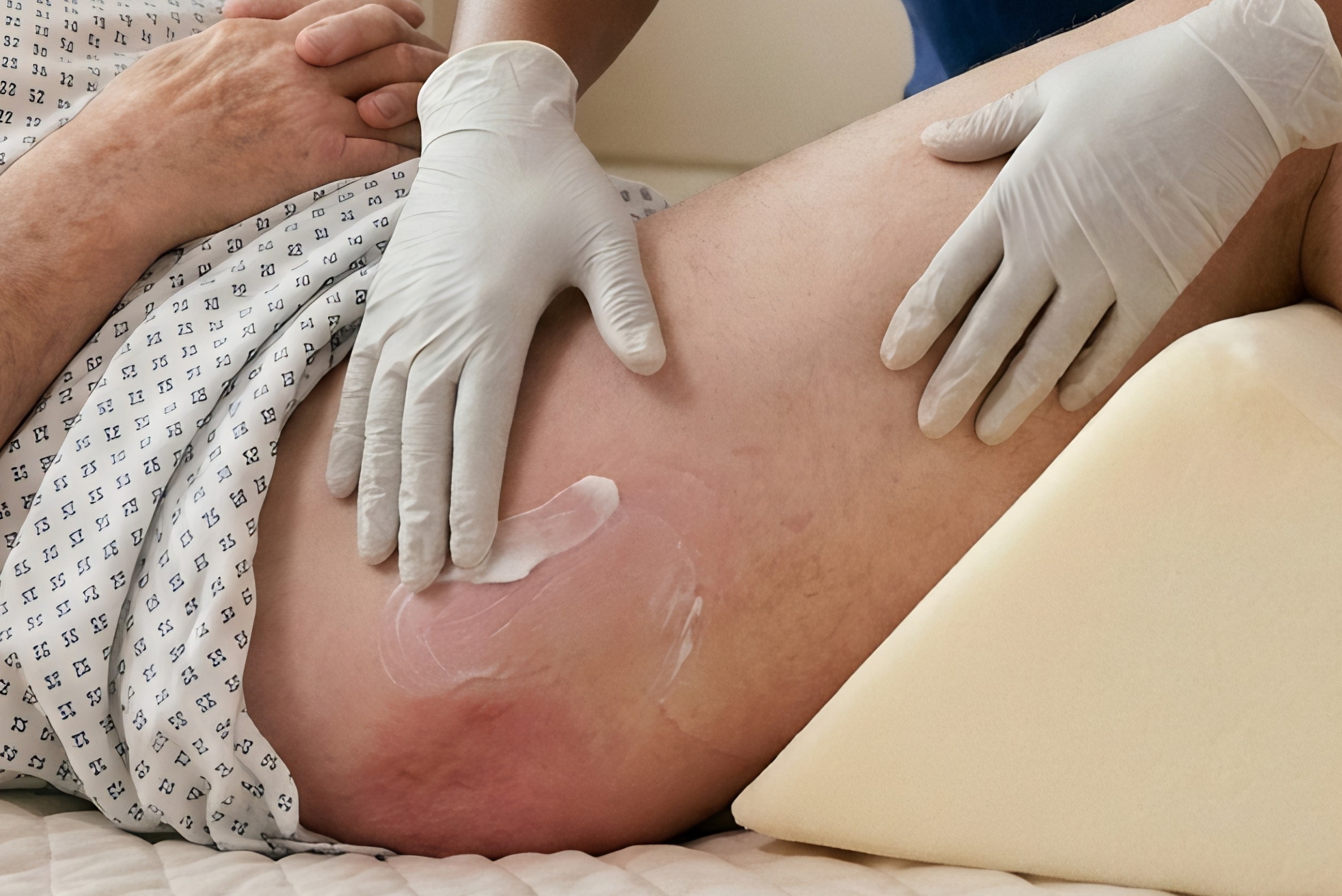
Bed sore management treats pressure ulcers that develop from prolonged pressure, reduced mobility, poor nutrition or long-term illness.
Our plastic surgery team assesses wound depth, infection risk, tissue loss and recurrence factors before planning dressing, debridement, flap cover or rehabilitation support.
The goal is durable healing, pain reduction and prevention of repeated ulcers through coordinated medical, surgical and nursing care.
Our plastic surgery team begins every bed sore assessment with a thorough evaluation of the wound stage, depth, and extent, including assessment of the underlying cavity that is typically far larger than the surface opening suggests. The patient’s overall medical status, nutritional state, vascular health, and pressure relief situation are all reviewed as part of the initial assessment, because addressing only the wound without correcting the factors that caused it will result in recurrence. The surgical plan is developed based on the wound stage and the patient’s suitability for surgery, and may involve debridement alone, debridement followed by negative pressure wound therapy and delayed closure, or primary flap reconstruction in appropriate cases.
At Galwa Care Hospital, our bed sore management approach recognises that surgery is only one component of a complex care pathway. We work with nursing teams, physiotherapists, dietitians, and nursing home or community care providers to ensure that pressure relief, nutrition, moisture management, and repositioning schedules are optimised alongside the surgical treatment. Patient and carer education is an essential component of care, ensuring that everyone involved in the patient’s day-to-day care understands how to prevent recurrence. Follow-up appointments monitor wound healing and the pressure relief situation, allowing early intervention if signs of recurrence or wound breakdown are identified.


Bed sores develop when sustained pressure over a bony prominence reduces or interrupts blood supply to the overlying skin and tissue. Without adequate blood flow, the tissue breaks down from the inside out, often creating a cavity beneath the skin surface that is far larger than the visible wound suggests. Left untreated, pressure ulcers progress through increasingly severe stages, developing deep infection that can spread to the underlying bone, causing osteomyelitis, and potentially leading to life-threatening systemic sepsis. At the most advanced stages, they represent serious medical emergencies requiring urgent surgical intervention.
Pressure ulcers are classified from Stage 1, which involves non-blanching redness of intact skin, through Stage 2 involving partial skin thickness loss, Stage 3 involving full thickness skin and fat loss, and Stage 4 involving full thickness tissue loss with exposed bone, tendon, or muscle. Surgery is generally recommended from Stage 3 onward when conservative wound management has failed, when deep infection or necrotic tissue is present, when the wound involves exposed deep structures, or when the wound cavity is too large to fill without tissue transfer. At Galwa Care Hospital, the surgical plan is individualised based on the wound stage and the patient's overall fitness.
Surgical management typically begins with thorough debridement to remove all dead, necrotic, and infected tissue and define the true extent of the wound cavity. Negative pressure wound therapy is then commonly used to promote healing tissue growth and prepare the wound for definitive closure. For deep or large pressure ulcers, flap reconstruction is the most reliable treatment, where a section of well-vascularised muscle or skin and fat from a nearby area is rotated or advanced to fill the cavity and provide durable, well-padded coverage over the bony prominence. Skin grafting may also be used in selected cases for shallower wounds.
Yes, pressure ulcers are largely preventable with the right care strategies in place. Regular repositioning of bedridden or wheelchair-bound patients, use of pressure-relieving mattresses and cushions, meticulous skin care to prevent moisture damage, optimisation of nutrition, and prompt treatment of any early skin changes are all essential preventive measures. After surgical treatment of a pressure ulcer, the same measures must be implemented rigorously alongside any changes to the patient's seating or positioning situation to prevent the wound from recurring. At Galwa Care Hospital, prevention planning is an integral part of the care programme for every bed sore patient.
Recovery timelines vary significantly depending on the stage of the ulcer, the extent of the reconstruction required, the patient's overall medical health, and how effectively pressure relief and nutrition are managed during healing. Flap reconstructions for deep Stage 4 ulcers typically require a period of careful immobilisation to protect the flap while it heals, followed by a gradual and supervised return to sitting or mobility. Smaller wounds managed conservatively may heal over several weeks, while complex surgical reconstructions in medically compromised patients can require many months of structured follow-up care before durable healing is confirmed.