Advanced IVF, IUI & ICSI treatments with highest success rates — compassionate care for every step of your fertility journey.
State-of-the-art IVF lab, experienced embryologists and personalised protocols for the best possible outcomes.
Comprehensive care across pregnancy, fertility and advanced gynaecology — delivered with privacy, safety and compassion.
15+ years of expertise, advanced labs and personalised treatment plans.
Advanced facial & body cosmetic procedures by expert surgeons — natural results, minimal downtime, maximum confidence.
Board-certified surgeons delivering natural, beautiful results with the latest techniques.
Expert reconstructive & plastic surgery for hand, birth deformities, cancer reconstruction and trauma — restoring form and function with precision.
Advanced body contouring, breast surgeries & intimate procedures by expert surgeons — natural results, renewed confidence.
Advanced laser skin treatments, intimate wellness procedures & expert hair restoration — all under one roof.
State-of-the-art laser tech & hair restoration by certified specialists.
Comprehensive fertility, hormonal & genetic diagnostics for females and males — accurate, fast and confidential.
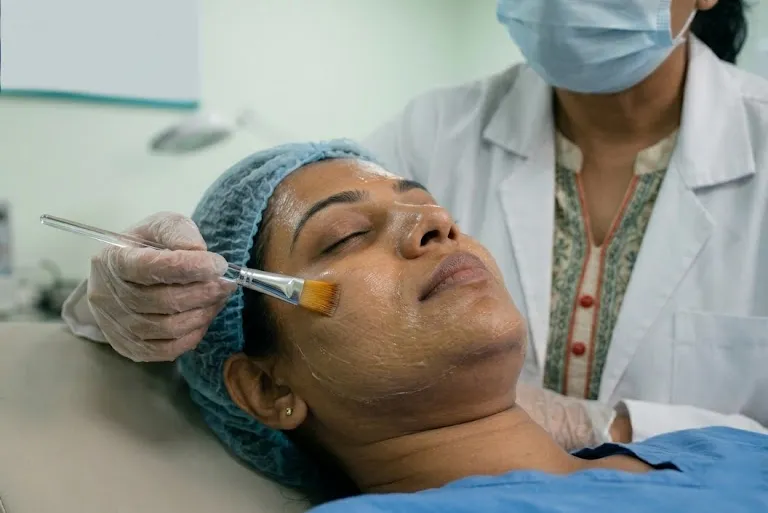
Chemical peels are controlled skin-renewal treatments used to improve dullness, pigmentation, acne marks, uneven texture, sun damage and early signs of ageing.
Our team selects the peel strength and protocol according to your skin type, sensitivity and concern, so the treatment remains focused, safe and result-oriented.
For patients looking for clearer, smoother and more radiant skin in Jodhpur, chemical peels offer a practical non-surgical option with personalised medical guidance.
Our skin specialists begin every chemical peel consultation with a thorough assessment of the patient’s skin type, tone, concerns, and treatment goals. This assessment determines the most appropriate peel type and concentration for that individual, accounting for factors including skin sensitivity, the presence of active acne or pigmentation, and any previous peel history. Pre-treatment preparation using specific homecare products may be recommended in the weeks before the first session to prime the skin and reduce the risk of adverse reactions. The peel is applied in a controlled and attentive manner during the treatment session, with the skin’s response monitored throughout to ensure safe and consistent penetration.
At Galwa Care Hospital, post-peel care guidance is detailed, personalised, and provided in both verbal and written form to ensure every patient has a clear understanding of how to manage their skin during the healing phase. Sun protection is an absolute requirement following any chemical peel, and patients are advised on the specific products and practices that will best support their skin’s recovery and maximise the treatment results. Progress is reviewed at each visit in a multi-session course, and the peel protocol is adjusted based on the skin’s response to previous treatments. Our team is accessible to address any concerns during the recovery period and to ensure the overall peel programme delivers the improvement in skin quality that the patient is seeking.


Chemical peels range from superficial to medium to deep, each using different active agents and penetrating to a different depth in the skin. Superficial peels using glycolic acid, salicylic acid, or lactic acid are appropriate for general brightening, mild acne, and light surface pigmentation with minimal downtime. Medium-depth peels using trichloroacetic acid address more significant pigmentation, moderate acne scarring, and early aging changes. Deep peels penetrate further and are used for more severe concerns. At Galwa Care Hospital, the selection is made after a detailed skin assessment that considers the patient's concerns, skin type, tone, and tolerance for downtime.
The amount of downtime depends on the depth of the peel used. Superficial peels typically cause mild redness and subtle peeling that lasts one to three days and is easily manageable without interruption to normal activities. Medium-depth peels produce more pronounced peeling and redness over five to seven days. During the peeling phase, the skin looks flaky and the old surface sheds to reveal the fresh skin underneath. Picking or forcing peeling is strongly discouraged as this can cause scarring. At Galwa Care Hospital, detailed aftercare guidance covering all aspects of recovery management is provided before each peel session.
Yes, chemical peels can be safely administered to darker skin tones with careful selection of the peel type, concentration, and any preparatory treatment used beforehand. Darker skin types carry a higher risk of post-inflammatory hyperpigmentation if the peel is too aggressive for the individual's skin, which is why specialist assessment and conservative initial selection are essential. At Galwa Care Hospital, peel protocols for darker-toned patients are specifically adapted to prioritise safety while still delivering meaningful results, with the approach adjusted progressively as the skin's response to treatment becomes established.
The number of sessions required depends on the depth of the peel and the severity of the concern being addressed. Superficial peels produce a visible improvement in brightness and clarity after each session, with cumulative benefits developing over a course of three to six treatments spaced at two to four week intervals. Medium-depth peels may produce more dramatic single-session results and require fewer total treatments. Results continue to develop over the weeks following each peel as collagen stimulation and cell renewal progress. At Galwa Care Hospital, a realistic treatment plan and expected outcome are discussed at the initial consultation.
Yes, chemical peels are one of the most effective and evidence-based treatments for both active acne and post-acne scarring. Salicylic acid peels in particular are well-suited to acne-prone skin because salicylic acid is oil-soluble and penetrates into the pores to clear congestion, reduce bacterial load, and normalise skin cell shedding. For post-acne marks and mild textural scarring, regular peels progressively exfoliate the discoloured surface layers and stimulate the remodelling of the skin beneath. More significant acne scarring may benefit from combining peels with complementary treatments such as microneedling or laser resurfacing.