Advanced IVF, IUI & ICSI treatments with highest success rates — compassionate care for every step of your fertility journey.
State-of-the-art IVF lab, experienced embryologists and personalised protocols for the best possible outcomes.
Comprehensive care across pregnancy, fertility and advanced gynaecology — delivered with privacy, safety and compassion.
15+ years of expertise, advanced labs and personalised treatment plans.
Advanced facial & body cosmetic procedures by expert surgeons — natural results, minimal downtime, maximum confidence.
Board-certified surgeons delivering natural, beautiful results with the latest techniques.
Expert reconstructive & plastic surgery for hand, birth deformities, cancer reconstruction and trauma — restoring form and function with precision.
Advanced body contouring, breast surgeries & intimate procedures by expert surgeons — natural results, renewed confidence.
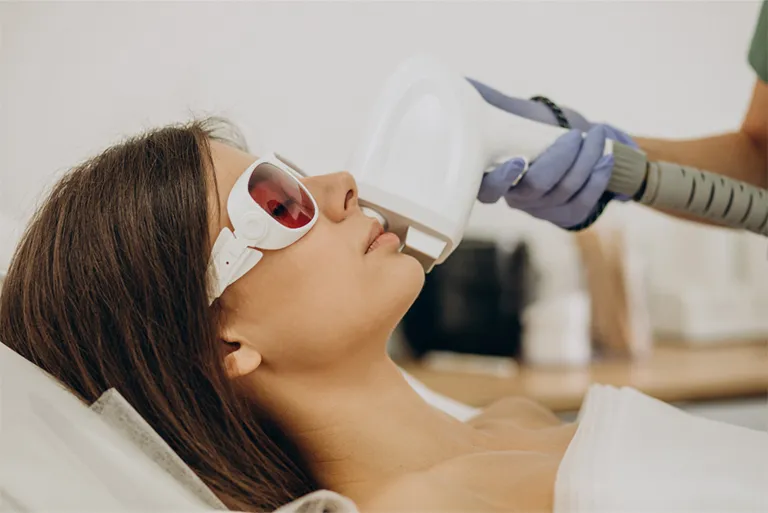
Advanced laser skin treatments, intimate wellness procedures & expert hair restoration — all under one roof.
State-of-the-art laser tech & hair restoration by certified specialists.
Comprehensive fertility, hormonal & genetic diagnostics for females and males — accurate, fast and confidential.
When standard investigations including semen analysis, hormonal tests, and ultrasound have not identified a clear cause, laparoscopy provides direct visual assessment of the pelvic organs to find hidden obstacles to conception.
When symptoms such as severe period pain, deep pelvic pain, or pain during intercourse suggest endometriosis, laparoscopy is the only definitive way to diagnose and simultaneously treat the condition.
When hysterosalpingography (HSG) reveals abnormal findings suggesting tubal blockage or irregularity, laparoscopy provides direct surgical confirmation and the opportunity for immediate correction.
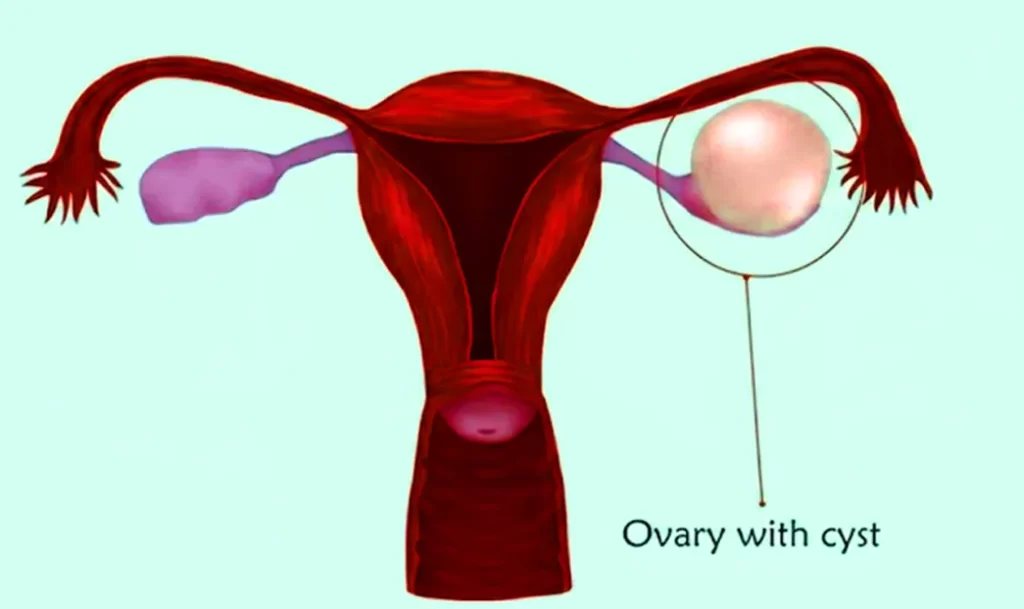
When ovarian cysts identified on ultrasound are persistent, symptomatic, or of uncertain nature, laparoscopy allows direct surgical assessment, precise removal, and maximum preservation of healthy ovarian tissue.
When a history of pelvic inflammatory disease, previous surgery, or infection suggests the presence of pelvic adhesions causing pain or affecting fertility, laparoscopy identifies and surgically releases them.
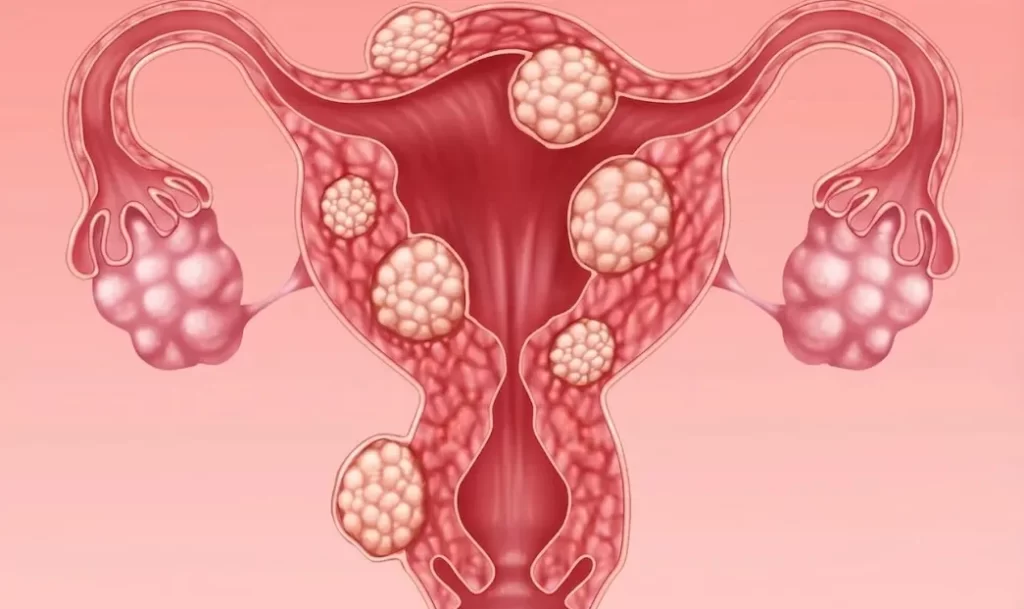
When fibroids are distorting the uterine cavity, blocking the fallopian tubes, or contributing to recurrent miscarriage or failed IVF implantation, laparoscopic surgical assessment and treatment is recommended.
The uterus is removed through keyhole incisions for selected fibroids, bleeding, prolapse, adenomyosis or cancer cases, reducing pain and recovery time.
Fibroids are removed while preserving the uterus, supporting fertility goals and relieving heavy bleeding, pelvic pain or implantation-related concerns.
One or both ovaries may be removed for complex cysts, tumours, torsion, endometriomas or cancer-risk indications while preserving healthy tissue where possible.
Cysts such as dermoids, endometriomas or cystadenomas are removed with tissue-sparing technique to protect ovarian function wherever clinically safe.
For selected heavy-bleeding cases, the uterine lining is treated to reduce or stop bleeding when future pregnancy is not planned.
Direct pelvic visualisation helps diagnose endometriosis, adhesions, tubal disease or unexplained pain, often allowing correction in the same sitting.

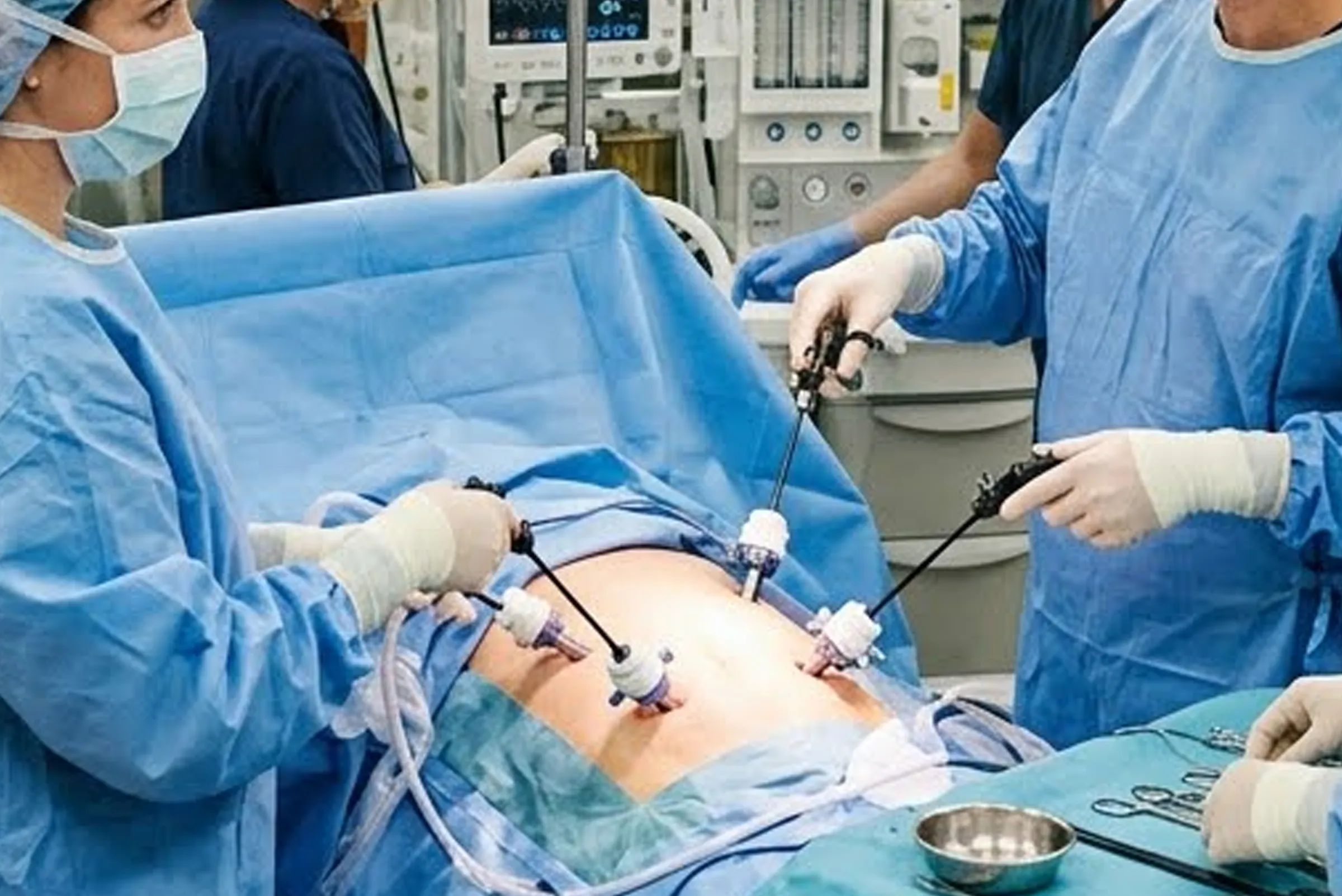
Procedures are performed through 2 to 4 small incisions of 5 to 10 millimetres each, leaving minimal visible scarring compared to the long incision required for open abdominal surgery.

The minimally invasive approach causes far less surgical trauma to surrounding tissue, resulting in substantially reduced post-operative pain and a much lower requirement for strong pain relief medications.

Simple laparoscopic procedures allow same-day or next-day discharge. Even complex procedures such as hysterectomy or myomectomy typically require only 1 to 3 days of hospitalization compared to 5 to 7 days for open surgery.

Most patients return to light activities within 3 to 7 days and full normal activity within 2 to 6 weeks, compared to 6 to 8 weeks or longer for recovery from equivalent open abdominal procedures.

Smaller incisions mean significantly reduced exposure of internal tissues, lowering the risk of post-operative wound infection, bleeding, and other surgical complications associated with open surgery.

Laparoscopy uniquely allows the surgeon to identify a problem and surgically correct it in the same sitting, eliminating the need for a separate diagnostic procedure followed by a second surgical intervention.

The high-definition laparoscopic camera provides a magnified, highly detailed view of the pelvic organs that actually surpasses the direct naked-eye view available in open surgery, improving surgical precision.

Our laparoscopic surgeons apply meticulous, ovary-sparing and uterus-conserving techniques in every procedure involving the reproductive organs, maximizing the patient's fertility potential after surgery.

The minimally invasive approach, combined with precise surgical technique and minimal tissue handling, significantly reduces the risk of post-operative pelvic adhesion formation compared to open surgery.

State-of-the-art 4K laparoscopic camera systems at Galwa Care Hospital enable the most technically demanding procedures to be performed with exceptional accuracy, consistency, and surgical confidence.


Eggs Successfully Frozen

Vitrification Survival Rate

Years of Experience

Support to Call

Diagnostic laparoscopy involves visually examining the pelvic organs to identify a problem, while operative laparoscopy involves both identifying and surgically treating the problem such as removing a cyst, excising endometriosis, or releasing pelvic adhesions in the same procedure. At Galwa Care Hospital, our surgeons are skilled in performing both simultaneously in a single sitting, meaning that in most cases a problem identified during diagnostic laparoscopy can be corrected immediately without the need for a separate second surgical intervention.
In experienced hands and appropriately selected patients, laparoscopic surgery offers significant advantages over open surgery including less blood loss, lower infection risk, reduced post-operative pain, shorter hospital stay, and faster recovery. In many cases, laparoscopic surgery actively improves fertility by removing obstacles to conception such as endometriosis, ovarian cysts, fibroids, and pelvic adhesions. Our surgeons at Galwa Care Hospital apply meticulous fertility-preserving techniques in every procedure involving the reproductive organs to maximize fertility potential after surgery.
Most laparoscopic gynaecologic procedures require 2 to 4 small incisions of 5 to 10 millimetres each, typically one near the navel for the camera and one to three additional ports for surgical instruments. These small incisions heal quickly and leave minimal scarring. Advanced laparoscopic gynaecologic surgery is performed under general anaesthesia at Galwa Care Hospital, ensuring you are completely comfortable and pain-free throughout the entire procedure. Our specialist anaesthesiology team manages your anaesthesia with the highest level of expertise and patient safety.
The recommended waiting period depends on the specific procedure performed. After simple cystectomy or adhesiolysis, your surgeon may advise trying naturally within 1 to 3 months. After myomectomy, a waiting period of 3 to 6 months is typically recommended to allow full uterine healing before conception is attempted. After diagnostic laparoscopy alone, conception may be attempted as soon as your surgeon advises, often within the same cycle if the procedure was straightforward. Your surgeon at Galwa Care Hospital will provide specific and personalized guidance based on your individual procedure and recovery progress.
Seek immediate medical attention if you experience heavy vaginal bleeding, severe abdominal pain that is worsening rather than improving, high fever above 38 degrees Celsius, inability to pass urine, persistent nausea and vomiting, or signs of wound infection such as increasing redness, swelling, or discharge at any incision site. At Galwa Care Hospital, every patient has direct access to our surgical team throughout the recovery period, and we encourage patients to contact us without hesitation if they have any concerns after their procedure rather than waiting for a scheduled appointment.