Advanced IVF, IUI & ICSI treatments with highest success rates — compassionate care for every step of your fertility journey.
State-of-the-art IVF lab, experienced embryologists and personalised protocols for the best possible outcomes.
Comprehensive care across pregnancy, fertility and advanced gynaecology — delivered with privacy, safety and compassion.
15+ years of expertise, advanced labs and personalised treatment plans.
Advanced facial & body cosmetic procedures by expert surgeons — natural results, minimal downtime, maximum confidence.
Board-certified surgeons delivering natural, beautiful results with the latest techniques.
Expert reconstructive & plastic surgery for hand, birth deformities, cancer reconstruction and trauma — restoring form and function with precision.
Advanced body contouring, breast surgeries & intimate procedures by expert surgeons — natural results, renewed confidence.
Advanced laser skin treatments, intimate wellness procedures & expert hair restoration — all under one roof.
State-of-the-art laser tech & hair restoration by certified specialists.
Comprehensive fertility, hormonal & genetic diagnostics for females and males — accurate, fast and confidential.
Preimplantation Genetic Testing checks embryos during IVF for selected chromosomal or genetic concerns before transfer.
At Galwa Care Hospital, PGT is considered for recurrent IVF failure, miscarriages, advanced maternal age or known genetic risk.
It helps choose healthier embryos and improve decision-making in advanced fertility treatment.
When previous IVF cycles have failed despite good quality embryos, or when a couple has experienced repeated miscarriages without a clear explanation, chromosomal aneuploidy in the embryos is frequently the cause. PGT-A identifies and excludes these abnormal embryos before transfer.
The risk of chromosomal errors in embryos increases significantly with maternal age. Women above 35 benefit most from PGT-A, which screens all chromosomes to identify euploid embryos with the highest potential for successful implantation and a healthy live birth.
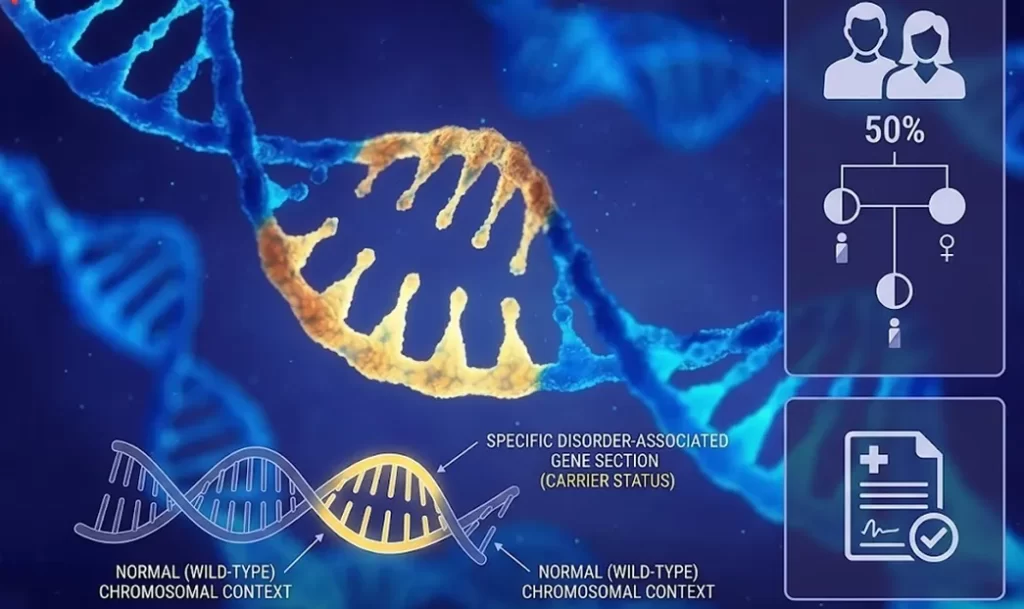
Couples who carry specific heritable conditions such as Thalassaemia, Cystic Fibrosis, Sickle Cell Disease, Huntington’s Disease, or Spinal Muscular Atrophy require PGT-M to identify and transfer only embryos confirmed to be unaffected by the inherited genetic condition.
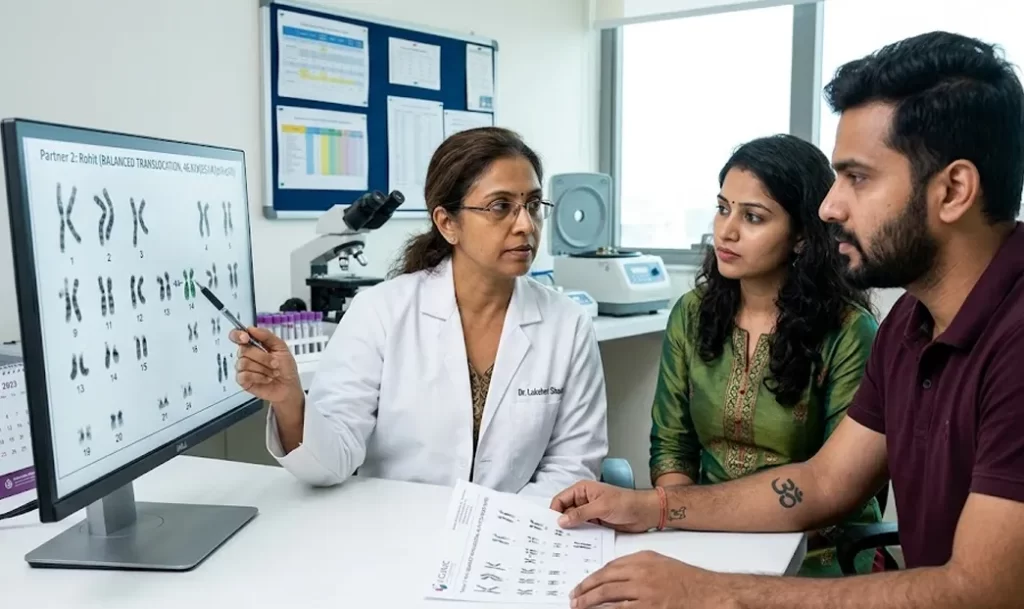
When one or both partners carry a chromosomal translocation, inversion, or deletion identified on karyotyping, PGT-SR identifies embryos with a balanced or normal chromosomal complement, dramatically improving pregnancy success rates and reducing recurrent miscarriage.
Couples who have had a previous pregnancy affected by Down Syndrome or another chromosomal condition, or who have had a child born with a serious genetic disorder, benefit significantly from PGT to reduce the risk of recurrence in subsequent pregnancies.
When no clear cause of infertility has been identified, genetic embryo factors may be silently contributing to failed conception. Couples seeking to maximise IVF success rates by ensuring only genetically healthy embryos are transferred also benefit from PGT-A as part of their treatment strategy.
Medical history, fertility status and goals are reviewed so the safest, most suitable treatment plan can be personalised.
Hormonal medicines are given with regular monitoring to support controlled follicle or egg development.
Embryos are cultured and monitored for development, quality and suitability before transfer or freezing.
Sperm is retrieved directly from the epididymis or testis using the planned surgical technique.
The laboratory measures key fertility parameters and prepares clinically useful results for specialist interpretation.
Embryos or reproductive cells are vitrified using rapid freezing and stored in monitored liquid nitrogen tanks.
Suitable options are reviewed carefully so selection remains safe, ethical and aligned with treatment needs.

PGT-A identifies euploid embryos with a normal chromosomal complement, ensuring that only embryos with the highest biological potential for successful implantation and a healthy live birth are selected for transfer.

By excluding chromosomally abnormal embryos that would otherwise fail to implant, PGT dramatically reduces the number of failed transfer cycles, saving couples from the emotional and financial burden of repeated unsuccessful attempts.

Chromosomal aneuploidy is the leading cause of early miscarriage. PGT-A substantially reduces miscarriage rates by ensuring that only embryos free of the chromosomal errors most responsible for early pregnancy loss are transferred.

PGT-M gives couples who carry heritable single gene disorders the ability to have a child who is unaffected by the condition, providing a pathway to healthy parenthood without the fear of passing on a devastating inherited disease.

PGT-SR identifies balanced or normal embryos in couples carrying chromosomal structural rearrangements, dramatically improving their chances of a successful pregnancy and reducing the recurrent miscarriage that these rearrangements cause.

As the rate of chromosomal errors in embryos rises sharply with maternal age, PGT-A becomes increasingly important and impactful for women above 35, providing the genetic certainty that improves outcomes at exactly the stage where natural embryo selection is least reliable.

PGT allows confident single embryo transfer by identifying the genetically strongest embryo, reducing multiple pregnancy risk while maintaining high success rates, which is the safest and most clinically optimal approach to IVF.

Without PGT, embryo selection is based on appearance alone. With PGT, selection is based on confirmed genetic health, transforming embryo assessment from a visual art into an evidence-based, genetically validated clinical science.

Lower chromosomal error rates in transferred embryos are associated with higher quality implantation, reduced early pregnancy complications, and healthier developmental outcomes for the resulting baby throughout pregnancy.

For couples who have experienced repeated failure, loss, or the birth of an affected child, PGT provides a level of genetic certainty and emotional reassurance that no other fertility investigation or treatment decision can offer.


Eggs Successfully Frozen

Vitrification Survival Rate

Years of Experience

Support to Call

Yes. The biopsy involves removing only 5 to 10 cells from a blastocyst that contains over 100 cells, and extensive research confirms no significant impact on the embryo's developmental potential or pregnancy outcomes when performed by skilled embryologists. PGT significantly improves the chances of a successful pregnancy by selecting genetically healthy embryos, but it cannot guarantee a 100% outcome as other factors including uterine receptivity, endometrial preparation, and overall health also play important roles in implantation and pregnancy. PGT gives every transfer the strongest possible genetic foundation, which is the most meaningful improvement any single intervention can make to IVF success rates.
PGT-A screens all 24 chromosome types for numerical abnormalities (aneuploidy) and is recommended for advanced maternal age, recurrent IVF failure, and optimising embryo selection. PGT-M tests for a specific known single gene mutation carried by one or both parents and is recommended for couples at risk of transmitting heritable conditions such as Thalassaemia, Cystic Fibrosis, or Huntington's Disease. PGT-SR identifies embryos with balanced chromosomal material in couples who carry a structural rearrangement such as a translocation, which causes recurrent miscarriage. Your fertility specialist and genetic counsellor at Galwa Care Hospital will recommend the most appropriate type based on your specific history, karyotype, and carrier screening results.
PGT results typically take 1 to 2 weeks to process in the accredited genetics laboratory. During this waiting period, all biopsied embryos are vitrified (frozen) to protect their viability and developmental potential. Once results are confirmed and genetically normal or unaffected embryos are identified, the best candidate is selected for frozen embryo transfer (FET) in a subsequent prepared cycle. This means that the transfer does not occur in the same stimulation cycle as the egg retrieval, but in a separate dedicated FET cycle where the uterine lining is specifically prepared for the best possible implantation conditions.
Yes, PGT-A is strongly recommended for women 35 and above as the risk of chromosomal aneuploidy in embryos increases significantly with maternal age, and selecting euploid embryos through PGT-A substantially improves IVF success rates and reduces miscarriage risk in this age group. Regarding previously frozen embryos, PGT generally requires a fresh biopsy from a blastocyst-stage embryo. Previously frozen embryos can technically be thawed, biopsied, and re-frozen, but this adds additional handling steps and is discussed on a case-by-case basis by our fertility team at Galwa Care Hospital based on the quality and developmental stage of the stored embryos.
PGT reduces but does not eliminate the need for prenatal testing. Many doctors still recommend confirmatory prenatal investigations such as NIPT or amniocentesis after a PGT-screened pregnancy for additional reassurance, as PGT tests only the specific genetic parameters for which it was designed. PGT can detect chromosomal aneuploidy across all chromosomes, hundreds of single gene disorders, and structural rearrangements, but it cannot screen for every possible genetic condition. Pre-test genetic counselling at Galwa Care Hospital sets realistic expectations, explains precisely what the selected PGT type will and will not detect, and helps every couple approach the process with the most complete and honest understanding of its capabilities and its limitations.